The Legend of Neverland
- 4.3
- Rating
- 10.00M
- Installs
- Free
- Price

 Analysis by App-foxy
I approached The Legend of Neverland as a newcomer rather than as someone already familiar with anime MMORPGs. That made its main appeal clear quite quickly: it is a role-playing game built around a Japanese-style fantasy world, ongoing character development, and the feeling that there is always another activity waiting. It is free to install, aimed at Teen players, and published by SKYWORK AI Pte.Ltd., so the first step is easy for most Android users. The more important question is whether its online, progression-focused design matches the way you like to play.
My short answer is that it is a good fit if you enjoy colorful fantasy settings, regular character improvement, and a game that gives you several directions to explore instead of one tightly controlled campaign. I would be more cautious if you want a quiet offline adventure, a compact story with a definite ending, or a game that never places attention on optional purchases. The experience is broad and inviting, but that breadth also means the early hours can feel busy.
Getting comfortable with the world before chasing progress
The game presents itself as a large shared fantasy adventure, and that description matters more than simply calling it an anime role-playing game. You are not only moving from one battle to the next. The appeal comes from building a routine around exploration, quests, character growth, and interaction with a wider player community. I found that the world feels most enjoyable when I stopped treating every activity as an obligation and chose a small goal for each session.
You May Also Like

 Blood Strike: 2.5 Anniversary
Blood Strike’s Loadouts Turn Every Drop Into a Tactical Gamble
A close look at Blood Strike’s custom loadouts: how fast access to signature weapons reshapes its battle royale rhythm, rewards preparation, and narrows the gap between fights.

 Pandora - Music & Podcasts
Pandora’s Music Is Easy to Start, but Harder to Recover
Pandora’s strength is its low-effort path from a seed to a station. Its weak spot is how much confidence it asks you to place in connection, setup, and quiet recovery.

 8 Ball Pool
 Is Built on Rivalries, Rematches, and Routine
A close look at the rivalries, rematches, shared routines, and unanswered safety questions that turn a quick pool match into a persistent mobile community.

 Samsung Music
’s Quiet Strength Is Playing What You Already Own
Its reach comes less from spectacle than from dependable access to a personal library. That simplicity is both the app’s strongest retention engine and its ceiling.

 AccuWeather: Weather Radar
AccuWeather Review: A Quick, Clear Forecast for Everyday Decisions
For everyday plans, the best forecast is the one you can understand quickly. AccuWeather makes rain timing, radar, and local conditions easy to act on, with a few trade-offs.

 Hill Climb Racing
Why Hill Climb Racing Still Turns Crashes Into One More Run
A tiny car, a bumpy hill and one more upgrade: Hill Climb Racing keeps resurfacing because its simple chaos makes every near-miss feel personal.
More From Our News Desk
View All News


For a first-time player, that goal might be finishing the next story task, improving equipment, or learning how a particular combat encounter works. Trying to understand every menu immediately is a mistake. The game has enough systems to make the opening feel crowded, especially if you are used to simpler mobile RPGs. I recommend following the main path first and opening side screens only when the game gives you a reason to use them.
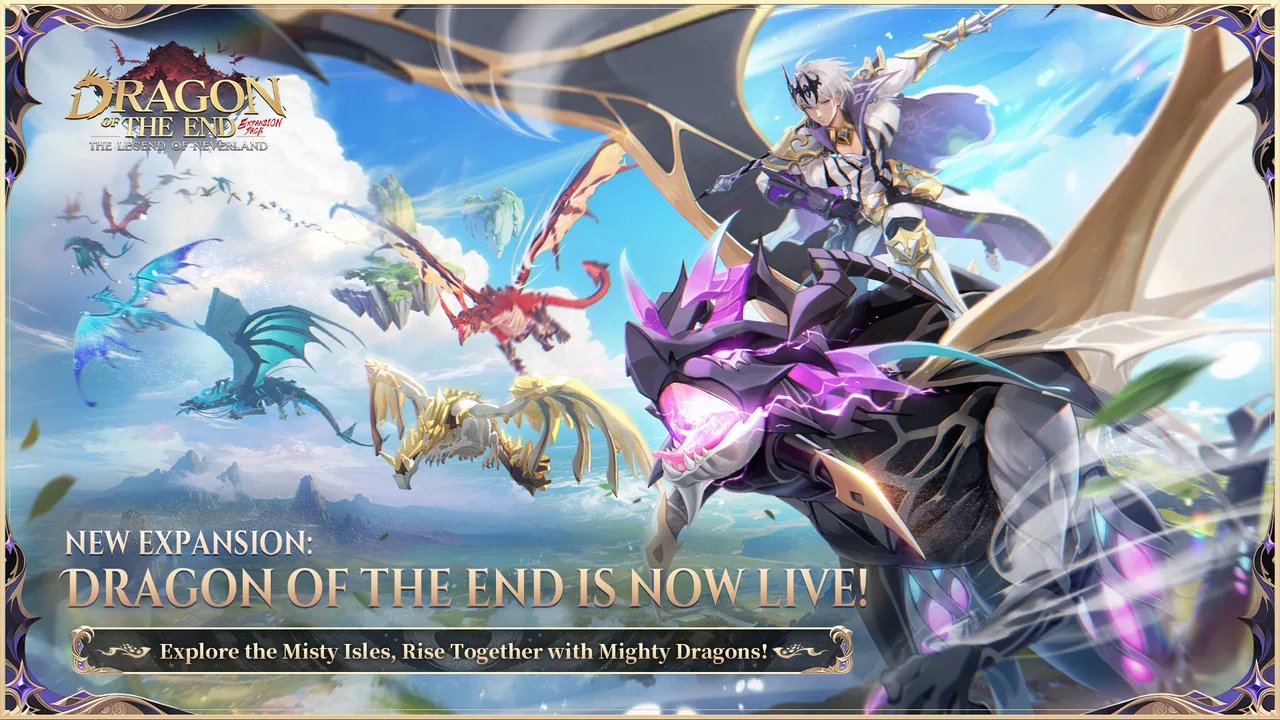
The anime-inspired presentation is one of the strongest reasons to try it. Bright character designs and a fantasy atmosphere make routine movement and battles feel more inviting than a plain menu-driven RPG. At the same time, the style will not appeal to everyone. If you prefer realistic medieval visuals or a restrained interface, the presentation may feel overly colorful and busy.
It is also worth setting expectations about the word “MMORPG.” The game is designed around a shared online experience, but that does not mean every moment requires intense cooperation. I could approach early objectives at my own pace, then pay more attention to social or group-oriented elements when I felt ready. This makes the game less intimidating for newcomers, although players seeking a purely solo campaign may still find the online structure distracting.
The scale can be both a strength and a weakness. A large world gives the game room for discovery and long-term play, but it can also make a new player wonder which task deserves attention. My practical advice is to treat the main quest as your compass. When several rewards or activities appear at once, choose the one that improves your understanding of the current area rather than automatically collecting everything.
That approach also helps with the game’s pacing. Progress feels more satisfying when you can connect an action to a result: completing a task, becoming stronger, unlocking a useful option, or reaching a new part of the adventure. If you jump between every available feature, the reward structure becomes harder to read and the game may start to feel like a checklist.
The first setup is simple, but the first decisions matter
The Legend of Neverland runs on Android devices using Android 7.0 or later. It is free to start, while optional in-app purchases range from $0.99 to $99.99 per item. I would make that financial detail part of the setup conversation, especially if a younger player will use the device. The Teen content rating is a useful reminder that this is not being positioned as a small children’s game.
Before beginning, I would make sure I had enough time for the initial sequence rather than launching it during a short break. Online role-playing games are easier to understand when you can follow the opening instructions without rushing. I would also decide in advance whether I want to play casually or invest in a longer-term character. That choice affects how much attention I give to upgrades, optional activities, and social features.
My first useful setup habit was to slow down at the character and interface screens. New players often tap through the opening because they want to reach combat, then later feel lost when the game begins presenting multiple forms of progression. Take a moment to notice where the character’s equipment, tasks, rewards, and broader activities are located. You do not need to memorize them; you only need to recognize where to return.
A second helpful habit is to avoid spending anything immediately. Free-to-play role-playing games often present attractive improvements early, but early progress is also the best time to learn whether the combat, art style, and online structure suit you. I would play through the opening with the free path first. That gives you a clearer sense of the game’s rhythm before any optional purchase becomes part of your routine.
The current version is 1.27.26051104, and the game has been available since September 5, 2022. Those details suggest an established title rather than a brand-new experiment, but they do not remove the need to judge it on your own device and play style. Performance, comfort, and enjoyment can vary depending on how long you play and how much activity is happening on screen.
Your first meaningful success should be deliberately small
I would define the first success as completing an early objective while understanding why the reward matters. That is more useful than simply reaching a new screen. Follow the initial direction, learn the basic movement and combat rhythm, and resist the urge to open every available feature. Once you complete that first task, pause and inspect what changed. The point is to connect the action with the character’s development.
For me, the best early workflow is straightforward: accept the main objective, travel where it sends you, fight only as much as needed to understand the encounter, collect the result, and then review the character screen. This sequence turns the opening from a stream of prompts into a repeatable loop. It also gives you a natural place to notice whether the game’s controls feel comfortable on your phone.
One non-obvious tip is to use the first successful objective as a test of attention, not just strength. Notice whether you are winning because you understand positioning and timing or because the opening is forgiving. That distinction becomes important later. If you build the habit of watching what your character is doing instead of tapping through every encounter, you will be better prepared when progress requires more deliberate play.
Another useful habit is to keep your early upgrades connected to your preferred way of playing. If you enjoy direct combat, prioritize understanding the tools that make battles feel responsive. If exploration and story are more important, avoid turning every session into an optimization exercise. The game offers a broad adventure, so there is value in finding a personal rhythm rather than copying the most aggressive progression style.
A realistic everyday scenario would be a short evening session after work or school. I would begin by checking the main objective, complete one manageable task, collect the reward, and stop after reviewing the next destination. That gives the session a clear beginning and end. On a longer weekend session, I would then explore optional activities or spend time with social elements. Separating those two types of play keeps the game from taking over every spare minute.
Players who enjoy mobile MMORPGs will recognize this structure, but newcomers should not assume that faster progress always means better progress. Rushing through the opening can leave you with a stronger character and a weaker understanding of the game. The first meaningful success is the moment you know what you did, what improved, and what you want to try next.
Where new players can become confused
The biggest source of friction is not a single difficult battle. It is information overload. A fantasy MMORPG can present quests, rewards, character development, exploration, and social opportunities close together. When several prompts compete for attention, I find it more helpful to ask, “What is the next action that teaches me something?” rather than “What can I claim right now?”
It is also easy to confuse activity with progress. Collecting every reward feels productive, but rewards are only useful when they support a clear objective. I recommend checking whether an item improves your current character or simply adds another decision. This small pause prevents the inventory and upgrade screens from becoming a source of unnecessary stress.
Optional purchases are another area where a new player should stay alert. The game is free, but the available purchase range is wide enough that spending can become a meaningful part of the experience for some players. I would not treat a purchase as a solution to confusion. First learn the basic loop, then decide whether an optional item genuinely improves the way you want to play. If you prefer a fixed-cost experience with no purchase prompts, this is probably not the right category for you.
The game’s online identity can also create uncertainty. Some players want immediate group interaction, while others prefer to observe before joining in. I think the better approach is to let your comfort level guide you. Learn the basic controls and progression first, then explore the shared-world side when you understand what you can contribute. That makes social play feel like an extension of your adventure instead of another system to master at once.
Compared with a traditional single-player role-playing game, this title offers more ongoing activity and a stronger sense of a living world, but less of the clean, uninterrupted focus that a handcrafted offline campaign can provide. Compared with a simpler mobile adventure, it gives you more room to develop a character, but demands more patience with menus, rewards, and long-term progression. The right alternative depends on what you value: story concentration, mechanical depth, social presence, or convenience.
There is also a time commitment trade-off. You can enjoy short sessions, but the game’s broader design rewards players who return regularly and remember what they were working toward. If you only play once every few weeks, the number of systems may make it harder to regain your place. Someone looking for a quick game that can be understood in one sitting would be better served by a more focused role-playing title.
Privacy and comfort should be considered in ordinary practical terms too. I would play with notifications under control and with a spending limit in mind, particularly on a shared family device. Those steps are not about avoiding the game; they are about keeping the game in its proper place. A large online adventure is more enjoyable when it supports your schedule instead of quietly dictating it.
How to decide whether to continue after the opening
After the first successful objective, I would give myself a simple test: do I want to know what lies beyond the current task, or am I only continuing because the game keeps presenting rewards? Genuine curiosity is a strong sign that the world and progression are working for you. If the prompts feel like chores from the beginning, more systems are unlikely to solve that feeling.
For players who stay, the next step should be specialization in attention rather than immediate spending. Choose one area of the game that you enjoy most and learn it properly. That might be the main adventure, character improvement, exploration, or interaction with other players. Focusing this way makes the large world feel manageable and helps you understand which features actually deserve your time.
I would also keep a personal stopping point for each session. For example, finish the current objective, review the next upgrade, and stop before starting a chain of tasks you cannot complete comfortably. This is especially useful in an MMORPG because the game can always offer one more thing to do. A stopping point protects the relaxed feeling that brought you to the game in the first place.
The title has attracted a substantial audience, with an average rating of 4.3 from around 226 thousand ratings and more than 10 million installs. That level of reach makes it easier to find a game community and suggests that the format has connected with many mobile players. Still, popularity does not make it universally suitable. The same online scale that attracts one player may feel noisy or demanding to another.
My recommendation is strongest for someone who wants an anime-styled fantasy MMORPG that can grow into a regular hobby. It is particularly appealing if you like returning to a character, improving gradually, and choosing between several kinds of activity. I would skip it if your priority is offline play, a short self-contained story, or a game with no optional purchases and minimal interface management.
In the end, The Legend of Neverland works best when approached as a flexible online hobby rather than a quick distraction. Start slowly, follow one clear objective, understand the reward you earn, and postpone spending until you know what you enjoy. That path makes the opening less confusing and gives you a fair test of the game’s real strengths: its colorful fantasy setting, broad role-playing structure, and ability to turn small improvements into a reason to come back.
My final advice to a friend would be simple: install it if you are curious about a shared anime fantasy world, but enter with realistic expectations. You will get more from it by choosing your own pace than by trying to master every feature immediately. Once the first successful action feels genuinely satisfying, the larger adventure has a good chance of becoming worthwhile.
FAQs for The Legend of Neverland
01What is the main gameplay style of The Legend of Neverland?
The Legend of Neverland is a fantasy MMORPG that offers an open-world experience with a focus on exploration and adventure. Players can engage in quests, battle monsters, and form alliances with other players. The game features a rich storyline and various character classes, providing a diverse range of gameplay styles.
02Is The Legend of Neverland free to play?
Yes, The Legend of Neverland is free to play, which means anyone can download and enjoy the game without any upfront cost. However, it does include in-app purchases for players who wish to enhance their experience with additional items, characters, or customization options.
03What are the system requirements for The Legend of Neverland on mobile devices?
The Legend of Neverland is available on both Android and iOS platforms. For Android, it typically requires version 5.0 or higher, while iOS devices need iOS 10.0 or later. It’s advisable to have at least 2GB of RAM and a stable internet connection for optimal performance.
04Does The Legend of Neverland support multiplayer features?
Yes, The Legend of Neverland supports multiplayer features, allowing players to team up with friends or other players around the world. You can participate in cooperative quests, join guilds, and engage in player-vs-player battles, making the social aspect of the game very engaging.
05How often does The Legend of Neverland receive updates?
The Legend of Neverland receives regular updates to improve gameplay, introduce new content, and fix any bugs or issues. Developers frequently add new events, quests, and features to keep the game fresh and exciting. Players are encouraged to check for updates to enjoy the latest enhancements.
Pros
- Engaging storyline with rich lore.
- Stunning graphics and vibrant visuals.
- Variety of character classes available.
- Frequent updates and new content.
- User-friendly interface and controls.
Cons
- In-game purchases can be pricey.
- Some quests feel repetitive.
- Occasional server lag issues.
- Limited character customization options.
- Energy system restricts playtime.

The Legend of Neverland
Gallery